May-June 2011

The New Era of CHP

CHP solutions are driving a new era of growth as businesses and institutions strive for energy efficiency and sustainability.

Article Tools

  • RSS
  • Save
  • Print
  • Email
Create a Link to this Article

Photo: Doubletree Guest Suites Boston

Friday, October 28, 2011

By Ed Ritchie

Comments

Projects that pair combined heat and power (CHP) with innovative biomass and biogas technologies are on the rise, and natural gas-fueled CHP systems are displacing traditional heating solutions that once relied on fuel hungry boilers. Not surprisingly, universities are a leading force in the CHP revolution, but wastewater utilities and heat-intensive markets, such as the hospitality industry, are also investing heavily. And that’s despite a less-than-hospitable environment for funding. How are they doing it? Let’s take a look at some innovative examples that define this new era.

Academic Freedom, From the Grid
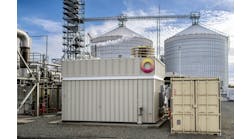
First up is a unique CHP project that will bring the University of Wisconsin (UW) Oshkosh one step closer to its goal of carbon neutrality, and for the first time in North America, a dry anaerobic biodigester makes the biogas to fuel the cogeneration system. Though traditional wet anaerobic systems are well established in North America, a dry system offers numerous advantages for a campus environment. The technology is well established in Europe, and the company supplying the system for UW Oshkosh, BIOFerm Energy Systems, Madison, WI, has 28 operating installations worldwide, with more under construction.

The university is expecting the 370-kWh cogeneration plant to produce 4,183 MW of thermal energy and 3,071 MW of electricity annually. The system relies on a 2G Optimus 370BG, built by MAN Engine, Nuremberg, Germany.

“This type of power plant has been proven in Europe for many years,” says Michael Turwitt, president and CEO of 2G-CENERGY Power Systems Technologies Inc. “When you look at anaerobic digestion for biogas, you have less than 200 operational sites in the United States, but compare that to Europe where you have approximately 16,000. Europe is about 25 years ahead of the US. The gas is about is the same as what you get from a wet digester, in terms of heat value and corrosiveness. Although we clean up the gas before it goes into the combustion process, by no means is it totally purified because our engines can take a much higher level of corrosion.”

The 2G systems are designed as “plug and play” modular units, and scalable so customers can add modules for more power. Scaling up could happen soon, because the city’s wastewater treatment plant is directly across the street and currently flares the biogas from its digester during the summer months. The flared gas could be piped to the CHP system to boost heat and electricity output and provide a comfortable margin of extra power to sell to the grid. All told, the economics look good, and the project is expected to pay for itself in about six to seven years. But according to Tom Sonnleitner, UW Oshkosh vice chancellor for administrative services, sustainability is the first priority for the project.

As the name implies, wet systems typically use wet waste streams such as livestock manure, and the process of fermentation requires additional amounts of liquid to facilitate agitation. Much of the industry’s growth has centered on dairy and livestock operations, and wastewater treatment plants. But the feedstock and process for dry anaerobic systems is much different, according to Caroline Chappell, application engineer at BIOFerm.

“It’s the same biological fermentation, but the difference is in feedstock and moisture content. We don’t have a slurry that is mechanically intensive,” explains Chappell. “There are no moving parts inside and no agitation needed. When the chamber doors are sealed, a percolate solution sprinkles down from above, and it’s recycled back and sprinkled on top again. We have seen food waste and yard waste combinations yield good results as a feedstock, but woody biomass with a lignin structure does not break down, so something like tree trunks would not work.” She notes that most of BIOFerm’s digesters end up providing fuel for CHP installations.

The feedstock travels an interesting path through the environment, supporting the process of fermentation. Temperature in the chambers is about 104°F, and the cycle takes 28 days. The building is under negative pressure with air treated through a biofilter. The Oshkosh system has four digester chambers, each with a processing
capacity of 2.000 tons per year. Chappell expects the facility to start out with about 6,000 tons per year, and reach 8,000 tons per year as the university gains experience and secures feedstocks.

Feedstocks such as municipal solid and industrial food processing waste offer prime sources of methane, though BIOFerm’s literature claims that over 3,000 inputs have been identified and researched. It’s a boost to recycling programs on the campus and for the city. In fact, with so much variety, it’s not surprising to hear from Dr. Gregory Kleinheinz, director of Environmental & Public Health Microbiology at the university, that finding feedstock isn’t a problem.

“We have several suppliers lined up, so it hasn’t been challenging to find material, but were trying to find the best material,” says Kleinheinz. “Every week we have a meeting with a potential partner, and it’s a matter of taking all those possibilities and determining which one is best for producing methane.”

Photo: Capstone
Syracuse University is home to one of the world’s most energy-efficient and green data centers.

No matter the source, the end result is the methane gas that’s harvested in a bag in the building’s ceiling, and then piped to the new CHP system from 2G-CENERGY Power Systems Technologies Inc., Orange Park, FL.

“We want to be free of fossil fuels as part of our Clinton Climate Commitment to be off the grid by 2025,” explains Sonnleitner. But, by the university’s best estimates, the digester should reduce grid consumption about 5% to 10%. Then building efficiency modifications and reduced electricity usage could gain another 30%. That still leaves a gap of 60%, so what’s next?

“We recently installed a geothermal heating and cooling system on a former food-service building,” answers Sonnleitner. “We’re taking the use of that building from the norm on campus which is about 125 BTU at 1,000 kilowatt-hours per square-foot of usage, and taking it down to 32 BTU. Rooftop photovoltaic panels and skylights are planned, along with three wind turbines along the riverfront adjacent to the school. We’re also putting up a new residence hall for the summer of 2012, and that particular building will be built to LEED platinum status.”

Sonnleitner adds that sustainability is one of the four legs of the plan for the school, and a growing number of students want to be in a school where sustainability is a driving force. Oshkosh has a sustainability director, and the operations plan has more than 125 sustainability-related goals.

Among those goals, Kleinheinz foresees a distinct roll for the biodigester and CHP system. “We want to use the digester as a cornerstone in the education of sustainable technologies,” he says. “We’ll also have a laboratory to do biomass testing for anybody that wants to know the potential of their material to generate methane. The laboratory allows us to do a lot of research and development to look at how we can modify and change feedstocks and enhance microbes to get more methane and energy production from the same material.”

Research and development are key components in another innovative energy project at the University of Northern British Columbia (UNBC). The university recently entered the commissioning phase of a biomass gasification system, supplied by Nexterra Systems Corp., of British Columbia. Sawmill residue from Lakeland Mills, a local business, allows UNBC to reduce its fossil fuel consumption by as much as 85%, while supporting the forestry industry, a major contributor to the area’s economy. As an added bonus for those concerned with sustainable forestry, about three-quarters of the mill’s intake comes from trees killed by the mountain pine beetle.

Photos: Photos courtesy of UNBC
UNBC’s biomass gassification system will allow the university to reduce fossil fuel consumption by as much as 85%, while also supporting sustainable forestry.

“We want to use this system as a platform to attract research,” says Robert van Adrichem, vice president of External Relations at UNBC. “And the second piece of this is connecting with government priorities at our provincial, state, and federal level, and their plans to provide stimulus funding in renewable energy. For example, if government was to say there is a plan for solar, wind, and bioenergy, and they recognize what we have done already and see it as beneficial, the area could become a provincial and national center for this technology, so then we have the means to move ahead.”

Considering the wide variety of energy related accomplishments at UNBC, it may be hard for the government to chose other than to seize the momentum. Since May of 2009, the university’s 400-kW Biomass Pellet Project has produced 2,640 gigajoules per year (GJ/yr) of heat, while achieving fuel conversion efficiency levels of 90%, and emission levels low enough to match natural gas. The $500,000 system also serves the university as a platform for applied research, focusing mainly on airborne emissions and the use of ash as a soil additive. The biomass project set the bar significantly higher, with a budget of $15 million, and a heat output of 80,000 GJ/yr. UNBC typically purchased about $1-million worth of natural gas per year to heat the campus and now expects to spend just about $400,000 per year on biomass.

The savings and benefits rely on Nexterra Systems Corp.’s proprietary gasification technology and its ability to provide a clean, versatile, and low-cost means of converting wood and other solid fuels into syngas. The technology began as an alternative to displace natural gas at sawmills, panelboard plants, pulp and paper mills, and institutional facilities. According to the company, the core technology is “a fixed-bed, updraft gasifier. Fuel, sized to three inches or less, is bottom-fed into the center of the dome-shaped, refractory lined gasifier. Combustion air, steam, or oxygen is introduced into the base of the fuel pile. Partial oxidation, pyrolysis, and gasification occur at 1,500–1,800 degrees Fahrenheit, and the fuel is converted into ‘syngas’ and non-combustible ash. The clean syngas can be directed through energy recovery equipment or fired directly into boilers, dryers, and kilns.”

Just like what goes up the chimney of a wood stove. As UNBC Chief Engineer Doug Carter sees it, the project uses gasification to break the traditional wood combustion process into three components. “The first is heating and combusting the wood by starving it of oxygen so it gives off creosote and gases that percolate out of the fuel, just like what goes up the chimney of a wood stove,” explains Carter. “We then take those gases into the next chamber and add oxygen so they combust at a very high temperature and burn very clean. Second, we take the hot stack gases and run them through a heat recovery boiler, and at that point you make steam or hot water at 240 degrees Fahrenheit. We transfer that to the heat exchanger in our central power plant, and that’s our primary source for heat throughout the entire campus.”

With all that efficient heat on tap, it made sense to pursue a third project, a $5-million upgrade to the campus distribution system downstream of the central power plant. The upgrade integrated a piping loop to gain more efficient pumping and redundancy in the supply and return lines. “This campus is a community of about 5,000 and after a 10-day commissioning phase, we are now operational and have heated this campus during the milder temperatures 100% with our bioenergy plant,” says Carter.

Milder temperatures at UNBC hover around 32°F. Something less than mild typically occurs from December to February, when the mercury can plummet from 32°F down to -35°F. “Summers can reach 100 degrees Fahrenheit, so you need a lot of heating capacity and a lot of cooling capacity, and that’s one of the reasons for the central plant,” adds Carter. “The other reason for it is the ability to have cogeneration, and we planned for that.”

When UNBC opened in 1994, the new central power plant was designed and outfitted for a CHP system that specified a natural gas fired reciprocating engine producing 2 MW of electricity. But the university couldn’t reach an agreement with the government and the utility, BC Hydro, so the power plant had to wait. “All the infrastructure is still in place,” notes Carter. “So, with another gasifier, we could burn syngas directly in one of the new engines that General Electric has developed and run a generator to produce electricity for the campus or connect directly to the utility’s transmission line.”

Although the university has yet to announce a date, in August of 2010 Nexterra Systems Corp. issued a press release announcing an order from UNBC for both a gasification and CHP system, based on a GE internal combustion engine producing 2 MW of electricity and 9,000 pounds per hour of low-pressure steam.

Awards Attract Students
The lack of an actual CHP plant didn’t stop the Association for the Advancement of Sustainability in Higher Education (AASHE) from choosing the UNBC bioenergy project as one of two top campus sustainability projects in North America. Harvard University was the other recipient. Such awards and a high-profile program can have a great impact on the curriculum and ability of the university to compete with other institutions, according to Mike Rutherford, a professor of environmental engineering at UNBC.

“I think we’ll be able to attract a wider base of students,” says Rutherford. “Our engineering program is fairly new, and we’re hoping to offer new engineering degree programs, so the gasifier will be a benefit to attracting students that are interested in bioenergy.” Rutherford and fellow professor Steve Helle both have students currently studying data from the bioenergy project, and Rutherford expects the university’s Forestry Department to develop new courses based on the alternative use of wood products. A proposal is also in the works for a new one-year Master’s program with applied science in the natural resources, and the new gasifier would be included in the curriculum.

With the momentum gained from the bioenergy initiative and the AASHE award, van Adrichem predicts that the curriculum may see new programs spurred by other renewable energy projects. “Over time as we fully maximize the renewable energy opportunities here, we could add solar and wind or implement a geothermal facility,” he says. “Where it makes sense we have the means to do more and implement combined heat and power as well. So our plan isn’t to rest just with the biomass.”

While biomass continues to grow in popularity with universities, there’s still plenty of growth in the biogas market sector, especially at wastewater treatment plants, where aging infrastructure is forcing water districts and operators to replace failing equipment. The City of York Wastewater Treatment Plant in York, PA, found itself in exactly that situation, having literally worn out a biogas fueled reciprocating engine CHP system. According to J. T. Hand, chief operating officer, York City Sewer Authority, in the late 1980s York installed a cogeneration system that used methane from the plant’s anaerobic digesters. The system also could generate additional power using utility gas. In early 2010, a cost analysis of this system indicated increased operating expenses primarily due to maintenance.

York’s solution was a microturbine-based CHP system consisting of one 600-kW and one 1,000-kW turbine package from Capstone Turbine Corporation, Chastworth, CA. The C600 supplies 600 kW of electricity for the facility and creates hot water to heat the building and the site’s two 98°F anaerobic digesters used in the waste treatment process. The C1000 generates additional power when the plant’s demand for electricity rises, and for peak shaving several hours each day. Officials expect the facility to generate more than 2.5 million kW of electricity and reduce energy costs approximately $278,000 per year. Also carbon dioxide emissions should drop by more than 1.5 million pounds annually.

“We are in the middle of a $25-million plant upgrade in order to attain compliance with the Chesapeake Bay Strategy and also our biological nutrient reduction permit goals from the state of Pennsylvania,” explains Hand. “So we’ve had this project planned for several years, and we had an opportunity to look broadly across the plant to see what else we could do and fix. A study of overall plant dynamics and efficiency identified that the methane department and recovery and cogeneration was reaching its useful life. Also, we did not have absolute confidence in the electrical grid feeding the plant. We had a primary and alternate feed, however we didn’t have insurance from the local power supplier that the secondary feed could provide us with reliable electricity should the primary feed drop out.”

Reliability was a high priority for York, and according to Jeff Beiter, managing partner at E-Finity Distributed Generation, Capstone’s exclusive Mid-Atlantic distributor, the system’s configuration of one 600-kW unit (comprised of three 200-kW microturbines) and the 1,000-kW unit (comprised of five 200-kW microturbines), allows for flexibility and close monitoring. “Digester gas production varies so the turbines can fluctuate their output based on building load, and we can also fluctuate based on fuel,” explains Beiter. So they’re in a load following situation with either two 200s at a time, or they can bring on the last four. Then we can even out turbine runtimes and optimize the maintenance cycle.”

When E-Finity commissions the units, it installs data communications via the Internet, and fault codes are e-mailed instantly to the technical department. Beiter says, “Typically the unit does a check and will restart itself, and if that’s not the case, our guys can go online and drill down into that turbine system and see all the parameters and do a system check, then wake it up and restart it remotely.”

“That’s why we chose to go with the combination of the C600 and the C1000,” adds Hand. “We’re assured of absolute redundancy in the plant’s operation in spite of any outage on the grid. It’s not cheap, but can you put a price on reliability?” That’s a tough question, but there is a price that can be put on efficiency. Hand anticipates that less time on the grid will save the Authority $142,000 a year, and that’s the price of the electricity that the plant will avoid taking from the utility. Finally, as with both of the universities discussed earlier, there is the issue of sustainability and emissions as they impact the local environment.

“We’re talking about the Chesapeake Bay and anything we can do to reduce nutrient deposits, and that includes our emission deposits,” says Hand. “By implementing the new micro turbine technology we are reducing our nitrous oxide and sulfur oxide and carbon dioxide emissions considerably and bringing them close to zero from the emission levels of our older system.”

No Capital Investment Needed
So far we’ve seen some great examples of new and innovative approaches to cost and efficiency savings with CHP using biofuel, but there are still plenty of natural gas-fueled installations that take advantage of proven hardware and minimize risks. Moreover in some cases, the CHP can literally be installed with no capital expenditure by the customer, yet still offer lower energy prices. The Doubletree Guest Suites Boston, a premier, all-suite hotel in Boston, MA, is an example of just such a scenario. In December 2010, American DG Energy, Waltham, MA, installed a 75-kW CHP system, located at the hotel but owned and operated by American DG. The CHP unit is from Tecogen, and is based on a standard automobile engine from General Motors. More on that in minute, but that fact is one of the many reasons that American DG can provide a CHP system at no cost to the hotel, plus a discount on the energy produced by the system. Additionally, the efficiency of the CHP system is expected to reduce the hotel’s greenhouse gas emissions by 321 tons of carbon dioxide annually.

According to Barry Sanders, president and chief operating officer of American DG, the concept allows the customer a simple approach not unlike getting a bill from their local utility every month. “The problem with CHP has always been that customers have great intentions, but if they don’t actively manage it on a daily basis they have a lot of dissatisfaction,” he says. “Because of CHP’s efficiency, we can give the client savings and bring a good return to our company. So our model removes the negatives. Ten percent is typical for customer savings over the utility’s price, but it’s very dependent upon the marketplace and the customer’s location. The beauty of CHP is that, though in some cases you do need government incentives, this is so efficient that in many cases the projects don’t require the incentives for the deal to be considered.”

Another less obvious benefit is that customers can turn off their boilers in the summer. “When the CHP is base-loaded on the thermal load and it’s sized properly, we see the boiler firing less and boilers are most inefficient in the summertime, so you get the added benefit,” explains Sanders. “We use a Tecogen reciprocating engine, and they use a General Motors platform fueled on natural gas supplying 75 kilowatts and 500,000 BTUs per hour.”

If the hotel’s thermal load changes, it’s easy to install more 75-kW units next to each other. “It’s very much like the traditional boiler design, but instead of one big huge boiler, now we have multiple CHP units, and you can mix and match with their various loads.”

According to Robert Panora, president of Tecogen in Waltham, Doubletree can count on a product that has proven itself for decades in the automotive industry. “These engines are made in many thousands every year so you get great technology at a low cost,” says Panora. “They are very simple to service because the parts are always available, and it’s not a dramatic event to pull one engine out and put another one in and be up and running in one day.”

A New Role for Microgrids
Based on the success of the 75-kW unit, Tecogen developed a slightly larger model, the InVerde 100-kW CHP Module. The InVerde will be used in a project spearheaded by the The Consortium for Electric Reliability Technology Solutions (CERTS), and installed at the Sacramento Municipal Utility District (SMUD), to implement a 300-kW base-loaded microgrid at the utility’s corporate headquarters in Sacramento, CA. The project is designed as a small scale local energy network equipped to operate in parallel with the grid, or in “island” mode by integrating distributed generation sources with local electric loads.

CERTS has been working with Tecogen to modify the company’s equipment to incorporate CERTS software that enables seamless transfer to and from the electric grid without elaborate controls and building upgrades. The project represents the first demonstration of this technology outside of the laboratory.

The Tecogen modules will operate as a conventional CHP application interconnected to SMUD’s electric grid, but with the capacity to disconnect from the grid and continue operating as an “island” whenever a grid disruption occurs. This changeover to and from isolated operation with the Tecogen/CERTS system is seamless thanks to a fast-acting “smart switch” that senses fault our outage conditions on the utility grid and rapidly separates the microgrid portion of the SMUD facility so its operation continues unaffected.

Tecogen’s system will deliver 300 kW of electricity to SMUD’s corporate headquarters campus, and 21 therms per hour of recovered engine waste heat. The heat will contribute to keeping the campus warm during winter, and it will drive a 120-ton absorption chiller for cooling during Sacramento’s blistering summer months. All told, this project demonstrates the strongest benefits of CHP—efficiency, reliability, and the security of running in island mode when outages or disruptions strike the grid.

Overall, the fact that CERT has been pursuing technology to strengthen the island mode application of CHP bodes well for further growth. Then too, there’s the rapid growth and economic benefits of using CHP to participate in demand response programs, a marketplace where dispatchable power is a key factor. So, if an industry has a significant demand for heat—such as universities, wastewater plants, hotels, and, yes even, electric utility headquarters—it’s hard to beat CHP generation as the best possible solution.

Author's Bio: Writer Ed Ritchie specializes in energy, transportation, and communication technologies.


Advertisement]

What Do You Think?


Be the first to tell us what you think!

Post a Comment

Note from the Editor: The content that appears in our "Comments" section is supplied to us by outside, third-party readers, and organizations and does not necessarily reflect the view of our staff or Forester Media—in fact, we may not agree with it—and we do not endorse, warrant, or otherwise take responsibility for any content supplied by third parties that appear on our website. All comments are subject to approval.

CAPTCHA Validation
CAPTCHA
Code:


Distributed Energy Email Updates!

Get weekly news and updates through our email newsletter!