


The Distributed Energy Blogs

The Blogger

Elizabeth Cutright

More from this blogger

Distributed Energy Editor's Blog

  • RSS
  • Save
  • Print
  • Email
Tuesday, February 14, 2012 3:51 PM

Energy Independence?

By: Elizabeth Cutright Comments

It’s a been a long-imagined dream for many Americans—a future of energy self-sufficiency where our oil and gas prices are no longer subject to the whims of OPEC and our main energy sources are clean, green and economical. According to a recent report by Bloomberg news, that future is just about here.

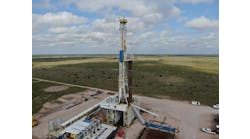
As reported by Rich Miller (with Asjylyn Loder and Jim Polsen) last week, the US is now “the closest it has been in almost 20 years to achieving energy self sufficiency.” One of the reasons behind this turnaround: natural gas. Over the last few years, the US has produced so much natural gas that instead of looking for imports to boost our supply, we may now be ready to export some of the excess. But increased production is not the only factor in play here—higher mileage standards and federally ethanol mandates (along with an admittedly slow economic environment that’s curtailed growth) have all conspired to reduce demand.

The result, according to data compiled by Bloomberg from US DOE data, is that “the US has reversed a two-decade-long decline in energy independence, increasing the proportion of demand met from domestic sources over the last six years to an estimated 81% through the first 10 months of 20111.” In fact, US energy self-sufficiency has been on the rise for the last 7 years (after hitting a 70% low in 2005). And as self-sufficiency increased, energy efficiency was also on the rise—most dramatically in terms of transportation, with US passenger vehicles increasing fuel efficiency to 29.6 mpg in 2011 (up from 19.9 mpg in 1978), according to data compiled by Bloomberg.

Some possible impacts of this fundamental shift in US energy use include:

* the possibility that the US could become “the world’s top energy producer by 2020”
* a boost in household incomes, jobs, and government revenue
* a reduction of the trade deficit
* enhanced manufacturer competitiveness
* greater flexibility in foreign policy—particularly in regards to the Middle East

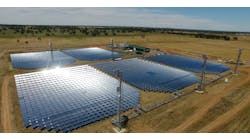
Of course, behind the numbers it’s not all good news. The expansion of domestic oil and gas production brings with it a whole host of environmental concerns—not the least of which is hydraulic fracturing (aka “fracking”) and its potential to pollute drinking water supplies. There is also some concern that keeping natural gas prices low removes the incentive to invest in renewable energy. And don’t forget that fossil fuels and natural gas—whether generated domestically or imported from somewhere else—are still the main culprits behind GHG emissions the resultant climate change implications.

In a statement in response to President Obama’s comments in support of increased use of shale gas, Iris Marie Bloom, director of Protecting Our Waters in Philadelphia said, “We’re disappointed in his enthusiasm for shale gas. [Obama] spoke about gas as if it’s better for the environment, which it’s not.”

So what do you think? How much of a role has a depressed economy played in the decreased demand for fossil fuels? And at what point do we differentiate between increased supply (like natural gas) and increased efficiency when it come to energy independence? And can we anticipate blow back for clean energy funding if traditional fuel sources are fine tuned and cheaper to use so that ultimately—as last week’s blog pointed out—we don’t reduce use, we just end up doing more with less? 

What Do You Think?


Disha

Wednesday, April 25, 2012

It is typically more exvsienpe for you to designate "green" power. It is a method to subsidize the building of more wind power, but in reality wind power is not any more "green" than nuclear power. The intermittent nature of wind power makes it necessary to have some sort of "backup" power, usually gas, wind uses much more concrete and steel than nuclear power for the same amount of megawatts. Wind power actually has a larger "footprint" than nuclear power, it takes more land to produce the same amount of power. We need to explore all the methods of producing power while minimizing the effect on the environment, this is one way of donating to that cause and voting with your $$.

Optimistic About Gas

Monday, February 20, 2012

The emergence of abundant supplies of natural gas is the best energy news for the U.S. in decades. Expanding the use of natural gas in power plants (e.g., combined-cycle power plants and, potentially, fuel cells power plants) and vehicles can help the U.S. achieve energy independence while greatly reducing green house gas emissions. Combined-cycle and fuel cell power plants emit fewer emissions and are much more efficient than even the most efficient modern coal-fired power plants. Replacing aging coal plants with efficient, low-emission gas-fired facilities than can operate in base load mode, be sited closer to loads, and reduce the need for expensive and energy consuming transmission facilities, may provide a more reliable, cost effective and environmentally beneficial solution for the nation’s energy needs than much of the costly and undependable wind and solar generation that is being added to our nation's power systems. System studies are needed to help the nation determine an optimal mix of energy resources for the future given the developments with natural gas. It is likely that such studies would conclude that building long transmission lines from remote regions to transmit wind energy is not economically or environmentally attractive compared to siting efficient natural gas plants close to loads.

EMUXIGMF

Wednesday, February 15, 2012

It is imperative that we maintain open lines of communication among those who support the use of shale gas and those that concerned about improper extraction techniques. As our economy slowly revives, we will have an opportunity to move with care to develop improved energy independence.

slohopes

Wednesday, February 15, 2012

There is much to be said for developing natural gas (especially if we replace our coal burning facilities with NG) but unless we factor in the external environmental price of doing so, we will end up subsidizing just one more fossil fuel at the expense of true clean energy.

Post a Comment

Note from the Editor: The content that appears in our "Comments" section is supplied to us by outside, third-party readers, and organizations and does not necessarily reflect the view of our staff or Forester Media—in fact, we may not agree with it—and we do not endorse, warrant, or otherwise take responsibility for any content supplied by third parties that appear on our website. All comments are subject to approval.

CAPTCHA Validation
CAPTCHA
Code: