Who knew? Apparently the hurdle that renewable energy needs to clear in California is not associated with price or generation capacity, but actually “contract restrictions imposed by federal law” and power utilities afraid to take a risk.
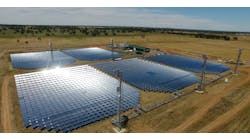
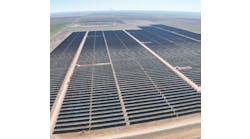
This week, Julie Cart reports in the Los Angeles Times on renewable energy projects left idle under the California sun at several state parks as Southern California Edison (SCE) and park officials negotiate over contract provisions. Apparently, the Parks Service has successfully partnered with Pacific Gas and Electric (PG&E) on similar projects, but SCE seems unwilling to submit to the tricky federal torts process that is often used by government departments (when Congress has yet to allocate funds that would be subject to possible liability claims) to facilitate the execution of these types of projects.
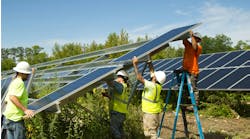
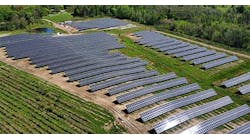
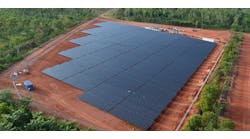
Last year, PG&E connected to a $5.8 million photovoltaic project at El Portal in Yosemite, CA. The project was completed in February 2011, and the interconnection agreement was signed a mere four months later. In contrast, a solar plant in the Santa Monica Mountains, another at Mono Lake, and a third in Death Valley sit inactive, while the forester service and SCE hash out draft agreements that seem to go nowhere.
“It is disappointing to see this big investment sitting idle when we could easily flip the switch and produce benefits,” park superintendent Wood Smeck says in the article. “We are purchasing electricity from SCE, whereas we could be using renewable energy from the sun and returning power to the grid. Until we can get the interconnection agreement approved, the switch is off, and we can’t benefit.”
Superintendent Sarah L. Craighead, superintendent of the Death Valley location, says, “We have been trying to get these agreements in place for quite some time. Everything is just sitting in the queue.”
So what do you think? How many other clean energy projects are languishing because of nitpicking and contractual negotiations? Can we really get a clear picture of how renewable energy can be integrated into the grid if potential successful projects are being held up by the very parties tasked with implementing these projects? And do you think there’s something more to utilities dragging their feet on these projects beyond the general assertion that they are simply protecting themselves from potential liabilities?
********
Upcoming Forester University Webinars
January 12th, 2012
Planning & Executing an Effective Pavement Preservation Program
As roadway networks and commercial vehicle loading continue to increase and Municipality taxation power remains limited, the need to effectively maintain and improve our pavement infrastructure is paramount. Join David Hein, V.P. of Transportation for ARA, to explore the key concepts of an effective pavement preservation program, program implementation needs and guidelines, and common roadblocks to successful implementation. Read more…
January 26th, 2012
5 Steps to Creating a Successful Public Outreach Campaign
Change starts with people. Whether your focus is stormwater pollution, energy conservation, pavement restoration, or recycling, a successful public outreach campaign resonates with your target audience and leads to long-lasting behavior change. Join Erica Hooper of SGA to explore a proven 5-step approach to crafting a successful outreach campaign based on real-world examples of the good, the bad, and the ugly. Read more…