

The Distributed Energy Blogs

The Blogger

Elizabeth Cutright

More from this blogger

Distributed Energy Editor's Blog

  • RSS
  • Save
  • Print
  • Email
Tuesday, November 08, 2011 5:15 PM

What Lies Ahead

By: Elizabeth Cutright Comments

Last month, I got a peek of what the big players in the energy industry predict will happen over the next decade in terms of energy efficiency, renewable energy, and the smart grid. While attending Schneider Electric’s annual Editors Event, I had a chance to hear about some of the trends anticipated over the next three to five years, as well as an overall forecast of the impact the economy will have on national energy policy and vice versa. Below, some highlights:

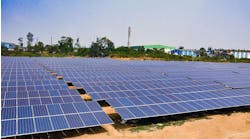
According to Aaron David, Vice President of North American PR, the global energy industry is refining its focus on the “underserved” energy customer. This is manifesting itself in two ways—by developed nations partnering with underdeveloped counterparts to form energy-saving partnerships, and with energy solutions being crafted to fit the unique demands and challenges of different geographical areas. For example, in India, new batteries have been developed that can be attached to a solar power charging station during the day, and then used for lighting in the evenings. The battery system was designed to require minimal maintenance or training and has been successfully used in rural India.

It’s a different story in the US. According to Jeff Drees, US Country President, “The energy dilemma is here to stay.” Drees believes that the national energy conversation should shift away from talk about climate change in order to focus on sustainability and energy efficiency, because, ultimately, “climate change is political, but whether you are blue or red, it doesn’t make green.” Drees says the US has the chance to capitalize on energy efficiency based on electricity consumption, because consumption per capita is “so much bigger than the rest of the world.”

Of course, many projects and programs have been stalled due to the current economic climate. As such, Drees warns that the energy industry can no longer rely on a robust construction market to fund innovation and change. But there is a silver lining—the $140 billion building efficiency market, where demand already exists, and where we’ve got the biggest potential to create new jobs and stimulate the economy.

“We need to raise the level of capability of the US worker to be able to capitalize on energy efficiency opportunity,” says Drees.

Drees went on to highlight six key trends, along with their implications and impact.

Six Key Trends:

According to Drees, in the next five years, the US will witness:

* 2.8 percent annual real GDP growth rate

* 1.8 percent annual rise in real income

* 0.8 percent annual increase in population as compared to China’s (0.06%)

* $340 billion annual investment in residential and commercial buildings

* $5 billion annual investment in transmission and distribution

* $1,411 billion annual energy expenditure estimate (which is the highest forecasted growth for mature economies and the world’s largest Op Ex opportunity according to Drees)

Drees believes these macroeconomic indicators, along with a sound policy environment, make the US “a key country for investment.” The US is known for its “Forge Ahead” business culture, says Drees, which facilitates a strong and open investment market. Drees anticipates solid growth through 2014 with low inflation and little risk for foreign investment. Additionally, it’s likely that R&D tax credits will be beneficial to high-tech industries, helping to push along advances in clean tech and renewable energy.

”The US is still the largest economy in the world and will be for the next 10 years,” says Drees.

Of course by now we all know about the push to move away from a one-way energy grid to a two-way energy and data “smart grid.” The promise is that a smarter supply combined with smarter demand will give us a grid that can combine flexible distribution with demand response and smart generation. The hope is that a smarter grid will bring energy efficiency to homes, businesses, manufacturers, and all of our biggest energy users. And while the vision of this smart grid future is seductive, Don Rickey (SVP for Energy Business at Schneider) endeavored to bring a “Smart Grid Reality Check” to the proceeds during his breakout session presentation.

Rickey defines the smart grid, saying: “It’s a collection of technologies … a collection of applications … a collection of capabilities that will allow the system to increase efficiency. The Smart Grid combines electricity and IT Infrastructure to integrate and interconnect all users—generators, operators, consumers—in order to continue to efficiently balance demand and supply in an increasingly complex network.”

What this all means is that we can expect a new “Grid Equation” made up of three drivers—growing electricity demand, the need to reduce carbon dioxide emission, and constraints on existing networks—and three accelerators—technology availability, active government and regulators, and active end users. The smart grid will come into being when these drivers and accelerators combine, but the essential ingredient is still energy efficiency.

“Through energy efficiency, we can achieve a 30% reduction in demand,” explains Rickey, expanding on how smart grid equation parameters vary across the world. In North America it’s the aging grid and the fear of extensive blackouts that’s pushing the smart grid agenda; in Asia it’s rapid growth and the need for infrastructure; while in South America and India the major concern is energy theft.

Another important factor is the integration of renewables. Introducing renewable energy sources, like wind and solar, into a national grid introduces “complexities that we need to deal with,” says Rickey, including flexibility, storage and energy management. And because it’s going to be a smart grid, Rickey believes that “We are in the midst of a transformation: Power transfer is now a two-way enterprise. Power is flowing both ways.”

Rickey wrapped his presentation with some hard numbers—Smart Grid Opportunities on a global level:

* Total estimated smart grid market in 2010: $23.97 billion

* Total estimated by 2017: $125.5 billion (Frost and Sulivan in 08/11)

* Pike Research: by 2015, a $15 billion market (not counting renewables)

Rickey concluded by reiterating that smarter grids will lead to smarter interactions. Connecting customers to the smart grid will enable the creation of products and solutions, while connecting customers with each other will facilitate relationships through demand and supply-side management capabilities. And finally, connecting complementary players to one another will build partnerships and strengthen alliances.

What Do You Think?


Be the first to tell us what you think!

Post a Comment

Note from the Editor: The content that appears in our "Comments" section is supplied to us by outside, third-party readers, and organizations and does not necessarily reflect the view of our staff or Forester Media—in fact, we may not agree with it—and we do not endorse, warrant, or otherwise take responsibility for any content supplied by third parties that appear on our website. All comments are subject to approval.

CAPTCHA Validation
CAPTCHA
Code:


Distributed Energy Email Updates!

Get weekly news and updates through our email newsletter!