March-April 2004

Solar: Global and Local, Too

Some manufacturers sell only machines, vehicles, and parts. In this industry, the benefits offered can be comprehensive.

Article Tools

  • RSS
  • Save
  • Print
  • Email
Create a Link to this Article

Sunday, February 29, 2004

By Paul Hull

Comments

When a new sector of industry suddenly shows enormous potential, there is a risk of dealing with less-than-qualified vendors. Remember the exponential advantages offered by so many dot coms? Remember the proliferation of inferior exercise machines? In contrast with these, the leaders in distributed energy are impressive in the totality of what they offer. Solar Turbines (a Caterpillar company) is no exception. A simple description of Solar Turbines would say that the company is a leader in the design, manufacture, and service of industrial gas-turbine power systems for the power-generation and oil and gas industries. More practical than the role of turbine vendor is the fact that the company will provide the associated plant equipment (including switchgear, fuel treatment, heat-recovery steam generators, sound attenuation, enclosures, and other items considered peripheral - and extra - by less dedicated vendors) along with multiple, practical services that are neither metal nor transportable in a wooden crate. Solar Turbines is one of those manufacturers whose success might have come from the ability to provide everything a customer might need, whether it is tangible or intangible.

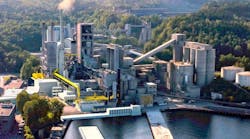
Three Titan 130 generator sets provide 40 MW of power, steam, and air conditioning for this manufacturing facility in Mossville, IL.

Many persons representing industrial facilities, community operations, and public and private groups concerned about the rising costs and questionable reliability of existing power supply sources know that something must be done. Most of us recognize that the national problem is causing concern, but our primary anxiety is for our own little corner of the world. It might be a hospital, college, school district, factory, recreational facility, or standard building within which the flow of work from multiple offices must not be interrupted. Remember all of those people who used to shake their heads, wag their fingers, mutter wisely, and talk about NIMBY (not in my back yard)? This problem of power is right in the middle of our backyard, whether we are in New York, California, Utah, Florida, Maine, Ohio, North Dakota, or Illinois. The advantage we have today - which we did not have when environmental concerns spawned a multitude of inexperienced, inept solution providers - is that such companies as Solar Turbines began to address this problem long before we thought of it and now have tried and tested solutions. If there were inappropriate systems, they have found and rejected them.

Prospective users of distributed-energy systems might be given the same advice as those who are thinking of buying a new personal vehicle but aren't sure what's available and what they are likely to pay. Ask questions. Do your homework. Ask suppliers (such as Solar Turbines) but also users. You'll find users listed on the Web sites of providers; there will be some who faced the same challenges you are facing. Ask them how they decided to go one way or the other and why they decided on one cogeneration system rather than another. Ask them if there are hidden problems or not-so-obvious difficulties (such as space or current capacities). You will be pleasantly surprised at the knowledge of engineers and representatives and at the data they have amassed over years of successful response to this energy challenge. You will be delighted at the way they are willing to share that knowledge with you.

Complete Energy Plants in the 1- to 50-MW Range

Solar Turbines (headquartered in San Diego, CA) can provide a total package for power-generation requirements and is a leader in the supply of mid-range industrial combustion turbines for applications in the 1- to 50-MW power range (see author's note at end of article). The system supplied will be the correct, complete energy system for your specific application. Beyond the supply of the total equipment package, Solar offers support. A customer might choose permitting support, financing, logistics, training, engineering, procurement, and construction, plus maintenance of an installed system. If it is more appropriate, Solar will operate the entire energy plant. You want evidence? So far, Solar Turbines has thousands of systems successfully operating in more than 90 countries.

Expect preliminary engineering from experienced staff to determine the correct system for your application. From that initial stage, Solar will take you through to the development of energy plants that help your bottom line and solve your power problems. With more than 11,700 units successfully operating worldwide (and a global services network to support them), the company can claim a proven track record in this industry, in both equipment and people. "Our goal is to help you achieve the lowest life cycle costs for your equipment," asserts a Solar brochure. "Whether you need a single part or complete asset management services, you know we will be there, ready to help." Included in the support are worldwide field service, technical training at field sites or Solar facilities, extended service agreements (including engine exchange, fixed-cost maintenance, and extended warranties on components), turnkey operation if appropriate, and always the latest technology and maintenance.


Events That Inspire Change

"Back in the late '80s and early '90s, legislation changed and required public utilities to back up cogenerators," notes Ed Pfleging at the Montefiore Medical Center (MMC) in Bronx, NY. Montefiore has more than a century of excellence in patient care, education, research, and community service. Its record of community outreach in combating AIDS, child abuse, lead poisoning, and other intractable problems is recognized nationally. "We began to seriously consider cogen. Primarily it was a financial decision brought on by higher electric rates and factors like poor power supply. MMC was well suited for cogeneration because we had a large electrical load and heat sinks. There were also DOE [Department of Energy] grants available for distributed energy." The decision was made to "go cogen." The feasibility was worked out by the MMC Department of Engineering and then escalated through the ranks until it eventually became a board decision. "The first considerations for those who'd like to know the feasibility of cogeneration at their facilities center around whether there are enough electrical load and heat sinks available," continues Pfleging. "Hospitals may be especially suited to cogen in that respect. The next hurdle they face is the physical space available at the site. Finally you need to take a good look at air permitting, a factor that varies considerably with each location."

A 5.2-MW Taurus 60 generator set provides peaking for power a municipal utility in Bountiful, UT.

"In 1994, we completed a 5.5-megawatt diesel/steam plant. In 2003, we completed a 9 -megawatt expansion comprising a Solar Taurus 60 [5-MW] gas turbine, with a 58,000-pounds-per-hour heat-recovery system generator and two 2-megawatt Cat diesels, for a total capacity of 14.5 megawatts," adds Pfleging. For the expansion, MMC chose Solar. "We felt they had superior technology and an outstanding record for useful life, maintenance support, research, and development. The Solar turbine is a leader in the field for dual-fuel, dry, low-NOx combustion, and it has an impressive availability factor of 98%." The availability factor is an aspect mentioned frequently by potential users. "If we are trying to improve unreliable services, we must expect total dependability from the equipment we choose" sums up what people have said.

"Our goals for the system have remained the same," asserts Pfleging. "We generate low-cost, efficient, reliable power and sell back excess to the utility when that is opportune. We also use the exhaust gas from the power generators - gas that, at many sites, is typically wasted to the atmosphere - and reclaim it to generate steam." Regarding what are major positives or negatives from MMC's decision to go cogen, Pfleging relates that his colleagues and he at the medical center are in control of their energy generation, are self-sufficient, and are not dependent on an unreliable public utility grid. "We take pride in producing this power at low cost. There is little pollution, and we are conserving resources. Among our main challenges are the retention and recruitment of staff and the effective purchasing of fuel."

The University of Medicine and Dentistry of New Jersey (UMDNJ) is the nation's largest public university of health sciences and now has five regional campuses. It has more than 4,500 students and 11,000 full-time faculty and staff. "Our original units were installed in 1987, and we are now considering an upgrade," says Tony Pennimpede at UMDNJ. "It was increased energy costs that prompted the initial decision. On the positive side, we understood there would be reduced heating and cooling costs, certainly competitive with our utility's. On the negative side, the installation costs, maintenance, and natural-gas pressure requirements caused us concern. We spent two years in our evaluation of available systems, and we accepted the recommendations of our consultants." UMDNJ's thoroughness in its research for the right solution seems clear, and Pennimpede offers advice that might be valuable to others considering the purchase of distributed-energy solutions. "Visit other facilities with the same or similar operating characteristics. Consider the environmental impacts, fuel-consumption availability, and, of course, initial and ongoing costs. Research the studies of consultants with experience in distributed-energy systems and ask about backup system requirements." At UMDNJ, the anticipated (and already seen) savings are reduced electric, heating, and air-conditioning costs, important facets of hospital and university operations.

The feasibility studies might be the most important steps. From their experience of similar challenges, the engineers at Solar can tell what is needed and - often more importantly - what is not needed. The onsite construction of the energy plant designed for your site includes project management, scheduling, and commissioning, in addition to such standard tasks as procurement of material, its fabrication, reliable quality control, and shipping. Your energy plant does not comprise simply the primary products from Solar Turbines; there are components necessary to the right configuration. A cogeneration plant, for example, can become the efficient way to generate simultaneous electricity and heat; for that, the system would use the combustion turbine generator package and heat captured from the combustion turbine's exhaust flow. The heat could chill water, process steam, or provide heating for buildings. In previous paragraphs, medical facilities were mentioned; the academic world, with its facilities serving thousands of students and staff, also has perused the merits of distributed energy for multiple benefits. Two universities are examples of that kind of system. In Houston, TX, a university plant has a combined cycle cogeneration system powered by a Solar Centaur 5-MW combustion turbine, and across the country in Pittsburgh, PA, the energy center at a university uses a 5.2-MW Taurus 60 SoLoNOx combustion turbine generator set to consolidate several chillers into one central plant. It also increases the capacity there to produce electricity and steam.

Utilities Understand the Advantages

Bountiful, UT, Jefferson, GA, and Mossville, IL, are not our nation's largest communities. Public Power in Bountiful has a 5-MW peaking plant (a Taurus 60 generator set), and the Electric Membership Cooperative benefits Jefferson with a 21-MW peaking plant (four Taurus 60 generator sets). In Mossville, three Titan 130 generator sets provide 42 MW for the cogeneration plant of the investor-owned utility. In the last four years, Solar Turbines has delivered more than 300 MW of distributed generation to an interesting range of customers in the utility sector. There are mobile power units, as a protection against volatility in electrical prices, and there are cogeneration applications, with their proven reliability and system efficiency. What kinds of utilities have acquired Solar Turbines's power? Some are public power companies, and others are cooperatives, rural electric associations, and investor-owned utilities. Why would public power be interested? For base-load cogeneration and peakers. Why does the Solar Turbines solution appeal to rural electric associations and cooperatives? For base-load cogeneration, combined cycle, and mobile peakers. Comments like "the use of gas turbines increases local ownership and control" and "they are a good hedge against volatility in our power markets" demonstrate good, local reasons why distributed generation has been considered and purchased. Other comments have been "they are simple to permit," "they are replacing some of our older equipment," "we expect better stability in rates," and "they help us match the load growth more cost-effectively." One can see that communities not only are concerned about power for their residents but also are eager to learn how to solve the potential problems of tomorrow.

This offshore module, including several Mars units, is shown leaving Solar's Texas fabrication and manufacturing facility, Turbofab.

This prudent attitude of many communities seems so much wiser than yesteryear's approach to road building, when we failed to anticipate how much a community could expand or how a new city could arise from that ranchland across the river. Today's authorities are considering their future power needs with significantly more knowledge and help available, thanks to the total service and supply of such companies as Solar Turbines. It is an encouraging prospect for our future.

Solar Turbines has recorded more than a billion operating hours (yes, billion) in a wide range of applications, including peaking, cogeneration, and steam turbine-assisted cogeneration (STAC). Their range of gas turbines (with a definitely solar nomenclature) comprises these: Saturn 20 (1,210 kWe), Centaur 40 (3,520 kWe), Centaur 50 (4,600 kWe), Mercury 50 (4,600 kWe), Taurus 60 (5,500 kWe), Taurus 70 (7,520 kWe), Mars 90 (9,450 kWe), Mars 100 (10,695 kWe), and Titan 130 (14,250 kWe). Cogeneration offers multiple benefits. The configurations for a system are flexible to suit local, seasonal thermal loads, and the efficiencies between 75 and 90% have obvious advantages. A user can expect a cost-savings that will mean short payback on investment in the system. Mobile power units readily can be transported to the appropriate site. With rapid setup and connection, they can be on-line in six minutes. The flexible configurations of a STAC system - it has a modular construction - also allow the user to match seasonal and/or thermal loads. "Our energy plants are friendly to your bottom line," observes Adam Robinson, manager for utility market development.

TurboFab is a Solar Turbines facility, a fabrication and manufacturing shop with more than 258,000 ft.2 of workspace. It is another reason why Solar Turbines can provide a total package. The facility produces large gas manifolds and structural steel bases, with the exacting tolerances that industrial applications demand. Among capabilities at this plant in Texas are fabrication, process skid and turbine base assembly, pipe spooling, painting, testing, instrumentation, and electrical assembly. Before equipment, such as a turbomachinery module, is shipped to a customer, it is tested thoroughly, taking advantage of the utilities servicing the site and the ability to test electric motors up to 1,000 hp, 4,160 V, and 60 Hz. The heavy fabrication bay can handle the fabrication and/or packaging of components ranging from small skids to single-lift modules. The milling machine can manage steel bases or work pieces as large as 42 x 13 x 13 ft. TurboFab can produce modules that weigh more than 1,000 tons or set up production lines to produce (or duplicate) bases, manifolds, generators, and containers.

Control and Monitoring

To control, sequence, and protect a gas turbine package, Solar Turbines presents the Turbotronic 4. This control system gives the operator the information necessary to properly control the system and provides various options in communication for the exchange of data with the customer's supervisory system. Supplied in two onskid, NEMA boxes (designed for use in nonhazardous areas), turbine control panels and onskid video display units contain all required switches and indicators for correct gas turbine operation. Standard labels are in English but also can be supplied in other languages, and the controls are installed at a location where the operator can read everything easily and comfortably.

The programmable controller is, as it were, the brain of the system, performing several functions together with the input and output signal modules. It will control the turbine and turbine-driven equipment during startup, loading, operation, and shutdown. It sequences the turbine and the equipment and protects them from abnormal operating conditions. It responds to commands from the system operator and presents analog and status outputs for display and monitoring. The language of the programmable controller is known as "relay ladder logic" (or it might be in "function block diagram" programming). Most operators and engineering people are familiar with the ladder logic format, since it is similar to the relay logic previously used. It also includes several commands for computation and file transfer that are useful for the operator's handling of calculation, data manipulation, and communication. The function block diagram programming formerly mentioned permits control algorithms to be programmed in a graphical format that process control engineers know well. This format also can take only one page to program a complex algorithm that would take several pages if relay ladder logic were used. It is a compact program, easier to read, easier to understand, and easier to troubleshoot.

What will the operator see on the screens? In a standard turbine package from Solar Turbines, there is the Menu Screen and screens for the Operation Summary, Event Log, Lube System, Operation Summary, Engine Temperature, Gas Fuel System, Liquid Fuel System, Maintenance Modes, VFD Configuration, Strip Chart, Alarm Log, Alarm Summary, Enclosure, Generator Set Points, Generator Control Modes, Bus Summary, Generator Summary, and Shaft and Bearing. Solar Turbines publishes a comprehensive explanation of the Turbotronic-4 Control System. You can find it and download it for perusal from the company's Web site at www.solarturbines.com.

The terrorist attacks in New York have left the front pages. That they alerted us to the vulnerability of our infrastructure might turn out to be an unintended blessing. In what is arguably the greatest challenge of our times - finding and implementing the best energy policy and solutions - it has seemed for some time that the federal government will be ousted from any leadership role by those small communities, community servers (such as hospitals and colleges), and companies who hitherto have been treated as mere spokes on the helmsman's wheel (as if the Captain Cooks of energy could steer anywhere without them!). What is so encouraging is that experienced companies, including Solar Turbines, are helping those communities with genuine empathy and assistance, as well as with the right equipment. At this stage it seems that, with resources available to every community and facility in the United States, we might have the good sense to plan for enough energy not only for today's level of demand but for tomorrow's likely - and, more importantly, greater-than-likely - applications.

Author's note: As of January 1, 2004, Solar Turbines and Caterpillar International Power Systems have aligned to form Caterpillar Power Generation Systems, a marketing organization representing Solar gas turbines and Caterpillar Motoren long-stroke, medium-speed reciprocating engines, two of the leading brands for 1- to 100-MW distributed-generation applications.

Author's Bio: Paul Hull is a frequent contributor to Forester Media publications.


Advertisement]

What Do You Think?


Be the first to tell us what you think!

Post a Comment

Note from the Editor: The content that appears in our "Comments" section is supplied to us by outside, third-party readers, and organizations and does not necessarily reflect the view of our staff or Forester Media—in fact, we may not agree with it—and we do not endorse, warrant, or otherwise take responsibility for any content supplied by third parties that appear on our website. All comments are subject to approval.

CAPTCHA Validation
CAPTCHA
Code:


Distributed Energy Email Updates!

Get weekly news and updates through our email newsletter!