
Churches are practicing what they preach to protect the environment by going solar.
The members of Unitarian
Universalist Church West in the Wisconsin city of Brookfield wanted to do more
than talk about treating the Earth well. They wanted to take action.
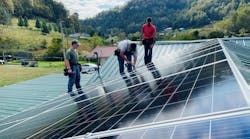
So, last spring, members of the
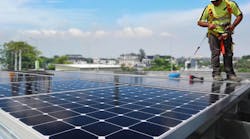
congregation donated about $28,000 to help pay for the installation of 42 solar
panels at the church. The panels now provide 15% of the church’s power
needs.
The panels will also save the
church some $2,000 in energy costs every year. But to Rev. Suzelle Lynch, the
church’s pastor, the cost savings, while nice, are not the main benefit of the
solar project.
“The congregation wanted a way
where we could all work together to sustain the sacred Earth,” says Lynch. “We
realized that by working together, we could make this project happen.
“Yes, there is a cost benefit to
the church, which is wonderful,” she adds. “But that wasn’t the primary impetus.
The primary impetus was our values.”
The Brookfield church is far from
being the only church across the country to have installed solar panels. Several
other congregations have also taken the step.
And, officials at these
solar-powered churches expect other congregations to follow their lead. Tapping
into solar and other renewable sources of energy is one way to do good in the
world, and it helps ensure a better world for future generations. In short,
solar panels and alternative energy fit well into the mission statement of any
church.
“Religious institutions have
always played leading roles on important social issues,” says Rev. Fletcher
Harper, executive director of GreenFaith, an interfaith coalition for the
environment based in New Brunswick, NJ. “Climate change is such an issue; these
institutions are going with solar power because they want to demonstrate
leadership on this issue. They are deeply concerned with the mission of
religious institutions to care for the Earth and show environmental
stewardship.”
Harper’s group alone has provided
counseling and assistance to 25 churches in and around New Jersey that have
installed their own solar panels.
And whenever one church installs
solar, it leads to even more religious institutions doing the same, Harper says.
When members of congregations see a church installing solar panels, they return
to their own houses of worship with one question: Why can’t we go with solar
power, too?
Going Solar in Delaware
Members of the Limestone
Presbyterian Church in Wilmington, DE, turned on their church’s solar power
system for the first time this August. The 36-kW system from GE Energy is
projected to provide two-thirds of the church’s required power. The church is
now the first in Delaware to install solar panels.
Rev. Bruce Gillette, who-along
with his wife Carolyn-serves as pastor of Limestone Presbyterian, says the
decision to go solar stemmed from the Presbyterian Church’s own teachings. The
church’s constitution states that church members are stewards who are called to
use the Earth’s resources responsibly and to develop technologies that help
preserve the environment and
enhance life.
Installing solar panels seemed
like one way to achieve the goals set out by the church constitution, Gillette
says. “We wanted to better care for God’s creation,” he says. “Solar panels are
one way that we can make the world better for our children and grandchildren—for
everyone.”
The GE Energy GEPvp-200 system was
not inexpensive. In all, installing the system cost the church $251,790,
Gillette says. The state of Delaware, under its alternative-energy program,
covered $125,895 of this cost.
The church took out a loan from
the Presbyterian Investment and Loan Program to cover the rest of the costs.
Church members, though, hope the savings the church realizes, by producing its
own electricity along with the funds it will get from renewable energy credits
for producing clean electricity, will pay off the 10-year loan the church took
out to pay for the rest of the solar installation.
Once the loan is paid off, church
leaders hope that the solar project will actually begin paying dollars to
Limestone Presbyterian. Because the solar panels are guaranteed to 25 years by
GE, the solar project has the potential to return a total of about $40,000 to
the church during the eleventh to twenty-fifth years of the panels’
lifespan.
Still, as with the Unitarian
Universalist Church West in Wisconsin, financial savings and benefits weren’t
the main reason that church members at Limestone Presbyterian decided to install
solar panels.
Officials with the Presbyterian
church have long been concerned with the negative impact of climate change on
the Earth, Gillette says. He believes that, by encouraging its member churches
to install solar panels or get their power from other renewable sources, the
national church is doing its part to help reduce global warming. “Solar panels
will help Limestone Presbyterians do what we say we believe we are called to do
in our church constitution and study papers,” says Gillette.
The Gillettes, themselves, were no
strangers to solar panels. The couple has had solar panels working on their own
home’s roof since December 2007. They know then, that solar energy is clean and
efficient, and that it can reduce power bills significantly.
One of the other reasons that
Limestone Presbyterian members went with solar was because they were concerned
about the large amount of pollution that is generated by traditional
large-scale, centralized power plants and didn’t want their church building to
contribute to the problem. Solar, and other forms of decentralized, onsite
energy, do not send nearly as much pollution into the atmosphere. The church
members wanted to reduce their reliance on traditional power sources.
Relying on energy that is clean is
just one more way that the church members fulfill their mission to be stewards
of the Earth, Gillette says. It’s also a way for members of the congregation to
do their part to leave behind a better world—at least in their small part of
it—for future generations.
“Jesus was concerned with the
whole person, including their physical well-being,” he says. “We are called to
follow his example and do what we can to help everyone’s health.
“The solar panels will result in
less pollution and better health,” he adds. “We have a genuine concern here
about the Earth’s worsening condition and its impact on future generations.”
Tending to the Earth in
Wisconsin
Lynch says that the members of her
congregation share the belief that by relying on solar and other forms of
renewable energy, their church is doing its part to protect the planet.
This has long been a goal at the
Wisconsin church, Lynch says. In the early 2000s, the church’s Earth Ministry
Committee recommended that the church purchase 10 to 20% of its energy from
green, environmentally friendly sources.
The church’s members, though,
proposed a more ambitious feat: They decided that their church should get all of
its power from green sources. The church is now a Green Sanctuary, a Unitarian
Universalist church that focuses on sustainable living. The church purchases its
100% green energy from We Energies, a public utility in Wisconsin.
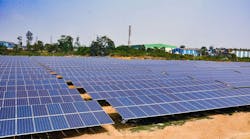
The church’s solar power system,
which went live June 5, 2008, consists of 42 panels that generate 200 watts of
energy each, for a total energy output of 8.4 kW. The panels are expected to
generate more than 10,000 kWh of energy a year.
The energy from the panels does
not directly power the church building. Instead, the church sells the power the
panels generate to We Energies. An inverter converts the energy solar DC power
to grid-ready AC power. The inverter then feeds the electricity to the public
grid.
“This whole project came from the
grassroots of our church congregation,” says Lynch. “It wasn’t that the board of
trustees said that we were going to do this. Members of the congregation, out of
our continuing green efforts, decided that this was something we should
explore.”
Many congregation members were
considering adding solar power systems to their own homes, she says.
Unfortunately, the cost of such systems proved too high for many of them. These
members decided that if they all pulled their money together, though, they could
afford a system for the church.
This meant that congregation
members were raising money for the solar power system before the project was
even approved by the church’s board of trustees. “The board members then looked
at the situation, realized that this was a train leaving the station, and wanted
to get on it,” says Lynch.
The church received a $27,500
grant from We Energies to help pay for its solar panels. It also earned a
$22,000 Focus on Energy grant from the Wisconsin Utilities Benefit Program.
Congregation members raised the remaining $28,000 on their own.
“We did this with no trouble at
all,” notes Lynch. “Some put in as much as $5,000—the largest gift we received.
Many people gave what they could-$100, $200, and $300. This was a way we could
sustain the sacred Earth. We all worked together, so that we could make it
happen.”
She emphasizes that, though the
church will save more than $2,000 a year on electricity costs, the financial
benefits weren’t the reason behind the decision to install solar panels.
Instead, members wanted to do
their part to do good for the planet. “We do have members who have installed
solar panels in their own homes,” says Lynch. “They did it knowing that the
energy savings they get won’t pay off the cost of the panels in their lifetimes.
They just have that sense of commitment to preserving the planet. That’s what
our congregation has, too.”
Leading by Example in New
Jersey
Rev. Jeffrey Mays, pastor of
Christ Congregation in Princeton, NJ, has long preached about the importance of
taking care of the Earth. It’s little surprise then, that he is especially
pleased with his congregation’s decision to install solar panels on the roof of
the church, which is affiliated with the United Church of Christ, the American
Baptist Churches, and the Alliance of Baptists.
According to a statement on the
church’s Web site, church members believe that it is part of their jobs as
Christians to use the Earths’ resources responsibly. Part of that job means
relying on renewable energy sources such as solar instead of rapidly diminishing
fossil fuels.
“It’s the difference between being
responsible, and acting like we are the owners of the Earth and can do whatever
we want with it,” says Mays.
The church turned on its 7.2-kW
solar electric system in January 2003. Since then, the system has been providing
about two-thirds of the church’s energy needs.
As with other churches, the
members of Christ Congregation relied on the expertise of their fellow members
before installing the panels. Several church members had already installed solar
panels on the roofs of their own homes. Their advice played a key role in
steering the church toward its own solar solution, Mays says.
The road to solar, though, wasn’t
an entirely smooth one. The church obviously needed enough hours of sunlight to
power the system. To get enough direct sunlight, though, the church needed to
remove a 60-foot tall pin oak tree on its property.
This caused serious problems, as
several neighbors objected to the removal of the tree. The neighbors, in fact,
arrived at the church just 30 minutes before church-hired arborists were to
begin cutting the tree down.
An impasse continued until a local
lawyer worked out a compromise. With the help of the lawyer, church members
shared their story with the community, explaining that the solar project would
be a positive for the environment and would reduce the church’s reliance on
fossil fuels.
The church eventually won a new
permit, one that gave it permission to cut down the oak tree, but also required
it to plant three new trees in the community and three more on its own
property.
The final twist came when
arborists were removing the pin oak. They discovered that a bacterial leaf
scorch had infected the old tree. Turns out, the tree would have had to have
been removed anyway.
That hurdle overcome, church
members quickly approved the solar project. Today, all the energy that the
panels produce is used. The church stores no excess energy in batteries, and
instead, sends it to the public grid.
“We are all very happy with this
system,” says Mays. “In light of all the news on global warming, in light of the
issues surrounding petroleum and energy, we decided it would be beneficial not
only to us, but, in some small way, to the larger community and to the world, if
we would seek alternative ways of generating such things as electricity.
“We are here for a short time on
this planet,” continues Mays. “But we are here only as stewards of creation. It
is our call, our mission, and our responsibility as people of faith to try to
live that out. It is our responsibility in some way to benefit coming
generations.”
The best news, as far as Mays is
concerned, is that several other local churches have either installed, or are
considering installing, solar panels in their own houses of worship.
“I hope other churches and other
non-profit organizations will consider this,” he says. “They are making so many
advances in solar. It seems almost monthly that we read about some new advance
in the solar energy collection realm. I think it is becoming more and more cost
effective to install these, too. So, we hope to see even more houses of worship
commit to solar.”
Like other churches, Christ
Congregation has seen its monthly energy bills decrease since turning on the
solar panels. The church has also taken advantage of solar renewable energy
credits.
“There is an opportunity to recoup
some of the costs, and that makes this very much less of a financial burden to
install these panels,” says Mays.
Harper, from GreenFaith, says that
more churches would go solar if the process was simpler. He would especially
like to see a simpler way for churches and other non-profit organizations to
obtain financing for solar and other renewable energy sources.
“The whole renewable energy
industry has suffered because financing is so uncertain,” states Harper. “There
is an uncertain regulatory landscape that makes it more difficult than it has to
be for churches to decide to go solar.
“I think we’d be seeing even more
churches go this route if there was more structure to the renewable energy
market-if it was more stable,” he adds.
Most church leaders are far from
experts when it comes to solar and other forms of renewable energy, Harper says.
Learning about solar panels and photovoltaic power can sometimes be an
intimidating process. This, too, has slowed the number of churches that have
installed solar panels.
“Leaders of religious institutions
do have to climb that learning curve to understand how solar works,” says
Harper. “They have to study the facts to understand how the financing behind
them works to make sure that they are protecting the health of their
institutions.”
Lynch, from Wisconsin, and other
pastors agree that a growing number of churches are installing solar panels
today. These pastors also agree that this is just the beginning, and that many
more religious institutions will embrace solar in the near future.
“After we put up our panels, I
quickly received 10 phone calls from other churches asking about our process,
and about how the panels are working,” says Lynch. “I think that’s wonderful. We
are trying to spread the solar gospel here, and I think people are
listening.”