July-August 2004

  • 1
  • 2

Oil Producer Installs Cogeneration System With Ultra-Low NOx Emissions

To help meet America's growing energy demand, oil producers are striving to increase production at existing wellfields. This involves more than just drilling additional holes in the ground. Wellfield infrastructure also needs to expand—but such expansion carries a risk of increasing air pollution.

Article Tools

Create a Link to this Article

Additional Article Content

By George Leposky

Comments

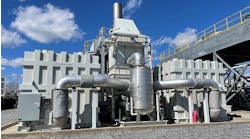
At one California wellfield, however, a new gas-turbine cogeneration system has increased the electric-power supply while actually reducing air pollution. The 1.4-megawatt turbine, model GPB15X, was manufactured by Kawasaki Gas Turbines - Americas, a division of Kawaskai Motors Corporation, USA, which is owned by Kawasaki Heavy Industries in Kobe, Japan.

This turbine incorporates a combustor supplied by Catalytica Energy Systems Inc. of Gilbert, AZ, and Mountain View, CA. Catalytica's Xonon Cool Combustion module contains a paladium-oxide catalyst that burns fuel flamelessly at temperatures too low to promote the formation of oxides of nitrogen (NOx), a major air-pollution concern in California. Xonon is "no NOx" spelled backwards.

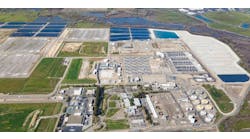
The Kawasaki/Catalytica package paves the way for expansion of a 1,500-acre wellfield near San Luis Obispo, CA, owned by Plains Exploration and Production Company of Houston, TX (listed on the New York Stock Exchange as PXP). The firm is a major oil and gas producer with more than 224 million barrels of proven oil reserves.

Cogeneration a Plus

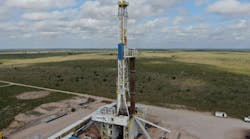
The wellfield now has 135 oil wells producing 1,700 barrels (71,400 gallons) a day. Its output travels by truck to a ConocoPhillips pipeline pumping station near Santa Maria, CA, just south of the San Luis Obispo/Santa Barbara county line. PXP wants to drill 95 more wells at the field in an effort to increase production to as much as 4,000 barrels (168,000 gallons) a day, says Paul DeLorenzo, operations supervisor.

PXP opted for a cogeneration unit because the San Luis Obispo wellfield uses superheated steam to help tease the oil out of the ground. "Our crude oil is very viscous," DeLorenzo explains. "Without heating, it won't move through the formation, so we put in steam at 500° Fahrenheit to loosen it up." The wellfield now has 50 steam injectors; the expansion plan includes 30 more.

Producing the steam are five 50 million - British thermal unit steam generators, huge boilers fueled by natural gas. Due to maintenance and backup requirements, they don't all run at once. With two in operation, they vaporize 252,000 gallons of water a day into 6,000 barrels of steam.

"The Kawasaki allows us not to start another steam generator," notes DeLorenzo. It augments the steam supply because the waste heat in its exhaust (17.58 pounds per second of air heated to 995°F) flows directly into a 20 million - British thermal unit heat-recovery steam generator (HRSG - pronounced "hersig"). The HRSG produces an additional 900 barrels of steam daily from 37,800 gallons of water.

Much More Economical

Before the Kawaskai went on-line, PXP bought all of its electricity - about 1.8 megawatt-hours a day - from Pacific Gas and Electric Company, a unit of San Francisco, CA—based PG&E Corporation, via 12-kilovolt overhead transmission lines. "We're a fully electric field here, from our oil-pumping units to the pumps that inject steam into the wells to our water-disposal pumps," DeLorenzo says. "PG&E could supply more electricity, but if we were to expand our field, we would have to pay about $5 million for a substation, plus the cost of the additional electricity."

Moreover, the PG&E supply is interruptible. "We wanted a non-interruptible source," DeLorenzo says.

For the moment, the onsite gas turbine has replaced almost 70% of PG&E's supply at a cost of $0.04 to $0.05 per kilowatt-hour, compared to PG&E's rate of $0.09 per kilowatt-hour. As the wellfield expands, PXP will begin to take more power from PG&E again until, at some point, the economics of the operation may dictate installation of an additional onsite generating system.

PXP gets natural gas from two sources: its own wells and Southern California Gas Company (SoCal), a Los Angeles, CA - based subsidiary of Sempra Energy in San Diego. The onsite wells produce about 24,000 mcf (thousand cubic feet) of natural gas a month, which PXP cleans to pipeline specifications in a gas plant at a cost of $1 to $2 per million cubic feet. PXP buys about 63,000 mcf of gas monthly from SoCal at spot rates that fluctuate daily, averaging about $5 per thousand cubic feet. By contrast, the steam from the cogen system's HRSG is practically a free good.

Advertisement

How It Works

Key to the Kawasaki unit's ability to keep pollutant emissions well below allowable limits is the novel catalyst technology of its Xonon combustor. "Xonon is the world's first and only commercially available catalytic combustion system for a gas turbine," says Megan Meloni, Catalytica Energy Systems' investor-relations and marketing-communications director.

Next Page >
  • 1
  • 2

What Do You Think?

Post a Comment

Be the first to tell us what you think!

Post a Comment

Not a subscriber? Sign Up
 
 
*  


Get Distributed Energy Email Updates!

Get weekly news and updates through our Distributed Energy email newsletter!