
November - December 2008

Building a Solar Legacy

San Francisco will soon be home to the largest municipal solar power project in the United States.

Article Tools

Create a Link to this Article

By Dan Rafter

Comments

This is good news to Arno Harris, CEO of San Francisco, CA-based Recurrent Energy, and the developer of the historic solar project. He’s been a longtime advocate of the commercial viability of solar power. A project such as the one in San Francisco—which will generate 5 MW of solar energy for not just one building, but several facilities in the city—can only further that goal.

“This is such an exciting project for me,” says Harris. “I’ve been working on developing solar in California for the last several years. We’ve done a 30-kilowatt system in San Francisco, but now we’re doing something so much bigger than that. We think projects like this can have a major impact on the commercial solar industry.”

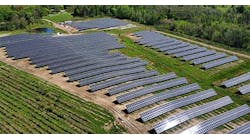
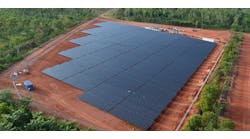
The project will bring 30,000 solar panels—enough to cover about 12 football fields—to the tops of San Francisco’s Sunset Reservoir and Pier 96/Norcal Recycling Center. The panels will increase municipal solar energy generation in the city by more than 300%, boosting San Francisco’s total solar output from 2 MW to 7 MW.

The project as of mid-June was still in the very early stages, with city officials and Recurrent finalizing their plans. But city officials were predicting that the photovoltaic solar panels should be installed and generating power by the middle of 2009. Even with the completion date still about a year away, San Francisco officials say the project will make the city a hub of solar power in the United States.

“The innovative approach to developing these projects is another example of our efforts to dramatically accelerate and expand solar power and other renewable sources for San Francisco,” says the city’s mayor, Gavin Newsom, in a statement. “With these projects, we’ll have larger-scale solar energy projects at city facilities and the resources to provide funds for residential and commercial solar energy systems through our proposed Solar Energy Incentive Program.”

And while the San Francisco project is a landmark application in solar, Harris is equally excited about the business end of the arrangement between his company and the city. Not only is the Recurrent Energy proposal unique for its size, it is also part of a growing trend in commercial solar power: the increasing use of power purchase agreements.

Under this system, Recurrent Energy will finance, design, build, and operate the solar energy projects at the two San Francisco locations for 25 years. The company will also provide all the energy generated by the panels to the San Francisco Public Utilities Commission for the same period.

Such power purchase agreements are popular with municipalities, because they allow communities to reap the benefits of solar power without having to worry about maintaining or operating the facilities that provide it. If something goes wrong with the solar panels in San Francisco, it will be Recurrent Energy engineers that are responsible for solving the problem, not the city.

Harris says that these agreements are key to boosting the amount of solar power generated in the United States. “We call it solar as a service,” he says. “It’s a big trend right now, and it’s enabling the market to expand at a much greater rate. With us acting as the owner and operator of the system, San Francisco doesn’t have to come up with the capital to build and maintain the system. We can arrange the financing. That way we are not putting a burden on the San Francisco city taxpayer.”

A Massive Project
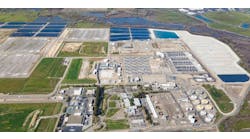
The two new solar projects coordinated and maintained by Recurrent will sit atop San Francisco’s Sunset Reservoir and its Pier 96/Norcal Recycling Center. Both locations have been retrofitted to withstand seismic disruptions, making them perfect locations for solar panels.

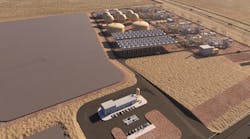
Rendering of the proposed project

The 30,000 solar panels Recurrent plans to install in these locations will not simply be providing power to one building or facility. Instead, the panels will help power city streetlights, San Francisco General Hospital, the city’s light-rail system, and its public schools.

Previous city-owned solar projects, like those now in place at the Moscone Convention Center, San Francisco International Airport, the Southeast Wastewater Treatment Plant, and others were developed through a more traditional approach: The city did its own contracting to build, operate, and own the photovoltaic systems.

Of course, with this 5-MW project, that will not be the case. All of those duties are the responsibility of Recurrent Energy.

“This is unique for a municipal system,” says Harris. “All the financing and ownership and operating are being provided by us. We are operating as an individual power provider. We own it, operate it, and are really just selling the electricity.”

The San Francisco project is also notable for its impressive scale. “We are seeing the beginning of a trend toward larger-scale wholesale distributed generation when it comes to solar,” he adds. “What’s driven a lot of growth before has been commercial distributed generation, where you have solar panels on a rooftop and you are feeding a building right under the array. We are seeing more support now for wholesale distributed generation. There is more interest on the part of utilities in having larger-sized arrays in the 2- to 20-megawatt range.”

For Harris, the San Francisco project is a bit like a dream come true. Solar developers have long fantasized about placing solar panels on San Francisco’s many reservoirs, he says. That’s because the locations are ideal, especially now that they’ve been seismically upgraded, for solar.

“In the solar community, there’s always been this fantasy about putting solar in San Francisco’s reservoirs,” adds Harris. “They are just ideal places for solar. The Sunset Reservoir is one of the first to be retrofitted seismically. So, we’re excited to be working on this project.”

John Doyle, manager of energy generation projects for the San Francisco Public Utilities Commission, says that all of San Francisco’s reservoirs are being upgraded to help them better stand up to seismic disruptions. The first of these completed is the Sunset Reservoir, where Recurrent Energy will set up a large portion of its solar panels.

The reservoir boasts 480,000 square feet of rooftop space, perfect for a large array of solar panels. “It’s a huge, flat area unimpeded by buildings or trees,” says Doyle. “As our other reservoirs get seismically upgraded, we may be putting more solar panels on them.”

The Pier 96/Norcal Recycling Center site already has an existing solar power system on it, which is providing power to Norcal’s recycling facility. The Recurrent Energy project would extend the solar capabilities at this site in addition to adding panels to the Sunset Reservoir, he says.

“This is an exciting project for us,” adds Doyle. “It will be our largest solar project. It’s a quantum step up in terms of project capacity. By putting in 5 megawatts of solar, we are almost tripling our current solar portfolio.”

Doyle doesn’t expect the city of San Francisco to be stopping its development of solar energy sites anytime soon. “We do have long-term plans to do more solar projects here,” he says. “We are looking at doing more municipal solar projects. We have a fairly large number of municipal areas in the city. We also have a lot of large land areas available, places like watersheds owned by our commissions. These all lend themselves to larger solar projects.”

The fate of these future projects, though, lies largely in the hands of Congress.

On October 3, President Bush signed into law the Economic Stabilization Act of 2008 that included the hoped-for 8-year extension of the solar investment tax credit. The act also lifted the $2,000 cap on the tax credit for residential systems, granting both commercial and residential systems eligibility for a 30% tax credit. Effective January 1, 2009, the law will encourage rapid growth for the solar industry by increasing its affordability and making it one of the safest and best investments in today’s uncertain marketplace.

The credit makes solar projects more affordable, and is especially useful in power purchase agreements such as the one Recurrent Energy is taking on in San Francisco. The 30% credit provides important cost savings to private firms. Without it, the future of larger-scale solar projects may be dim.

With the extended tax credit in hand, Doyle says he’d like to see the city of San Francisco become involved in more power purchase agreements with solar providers such as Recurrent.

In the Sunset Reservoir and Pier 96 project, Recurrent Energy will maintain and operate the solar projects for 25 years. “This takes away the maintenance headaches for us,” says Doyle. “Recurrent Energy has every incentive to keep the system very well maintained for the whole 25-year term. If they system doesn’t produce, they don’t get paid. So they do have very strong incentives to keep the plants operating in peak condition to produce as many kilowatt-hours as possible.”

Meeting Specific Needs
When the members of the San Francisco Public Utilities Commission put out a request for proposal for their proposed solar projects at the Sunset Reservoir and Pier 96, they had certain minimum requirements.

First, the project needed to be of a large scale. The city had ambitious plans for this particular solar project. Secondly, they wanted the new solar panels to be installed at the reservoir and pier.

Harris and his team at Recurrent Energy put together the most attractive bid. To Harris, this project is just another step toward making solar a more viable energy option.

Harris founded Recurrent Energy in 2006. Right from the start, Recurrent offered Harris’ “solar-as-a-service” concept to municipalities. From its first days, Recurrent promised to build, own, and operate its solar projects, sparing municipalities the chore of having to handle any of these steps
themselves.

To do this, Recurrent is constantly raising money from investors. Last year, Harris says, the company raised $10 million. In late 2007, the company closed a $200-million staged solar project fund with Morgan Stanley. Under the agreement, Morgan Stanley will provide financing for $100 million worth of Recurrent Energy solar electric power projects in 2008 and an additional $100 million in 2009.

The company is still raising money, so that it can tackle projects such as the work it will soon be doing in San Francisco.

Recurrent has signed supply agreements with the suppliers of solar power modules to guarantee that it will have access to a wide range of solar products. The company is now working with suppliers Yingli Green Energy, Suntech, and SolarWorld California.

Solar modules are not cheap, typically accounting for more than half of a solar project’s cost. By contracting for the modules directly from the three suppliers, Recurrent Energy, Harris says, gets greater control over pricing for its projects. And by working with three different suppliers—from more than one country—Recurrent is protected from the risks of working with a single supplier or country.

As Harris looks at the solar industry, he sees big things in the future. Expect more projects like the 5 MW worth of solar his company will soon be installing in San Francisco, he says. “I think solar is becoming an easier sell in large part because of some of the business-model
innovations we are bringing to market now,” says Harris. “Solar as a service is a key component of that. It enables our customers to buy solar electricity without the hassles of operating a solar plant.”

This may be a good time for solar providers to push for additional projects. A June 10 poll of US households found that vast majority of residents favor solar as an alternative energy source.

Advertisement

The SCHOTT Solar Barometer, a survey conducted by the polling firm Kelton Research, found that 77% of US residents say that the development of solar power, along with other renewable energy sources, should be a top priority of the federal government. When asked what single energy source they would support if they were president of the United States, 41% of residents chose solar. Respondents selected solar and wind together nearly 20 times more often they did coal.

Harris also looks forward to seeing a greater number of larger solar electric projects. “We are doing a lot to make solar more friendly on large leased properties,” he says. “One of the interesting is that where solar has been most successful has been largely on commercial property. You see successful solar projects on WalMart or Kohl’s stores, places like that where you have lots of real estate, lots of rooftop space that these companies own and operate. The vast amount of solar-friendly rooftops is on leased properties. What we are doing is coming up with an agreement that makes solar as a service very attractive to those building owners.”                                                                 

Author's Bio: Dan Rafter is a technical writer based in Illinois.

What Do You Think?

Post a Comment

Be the first to tell us what you think!

Post a Comment

Not a subscriber? Sign Up
 
 
*  


Get Distributed Energy Email Updates!

Get weekly news and updates through our Distributed Energy email newsletter!